
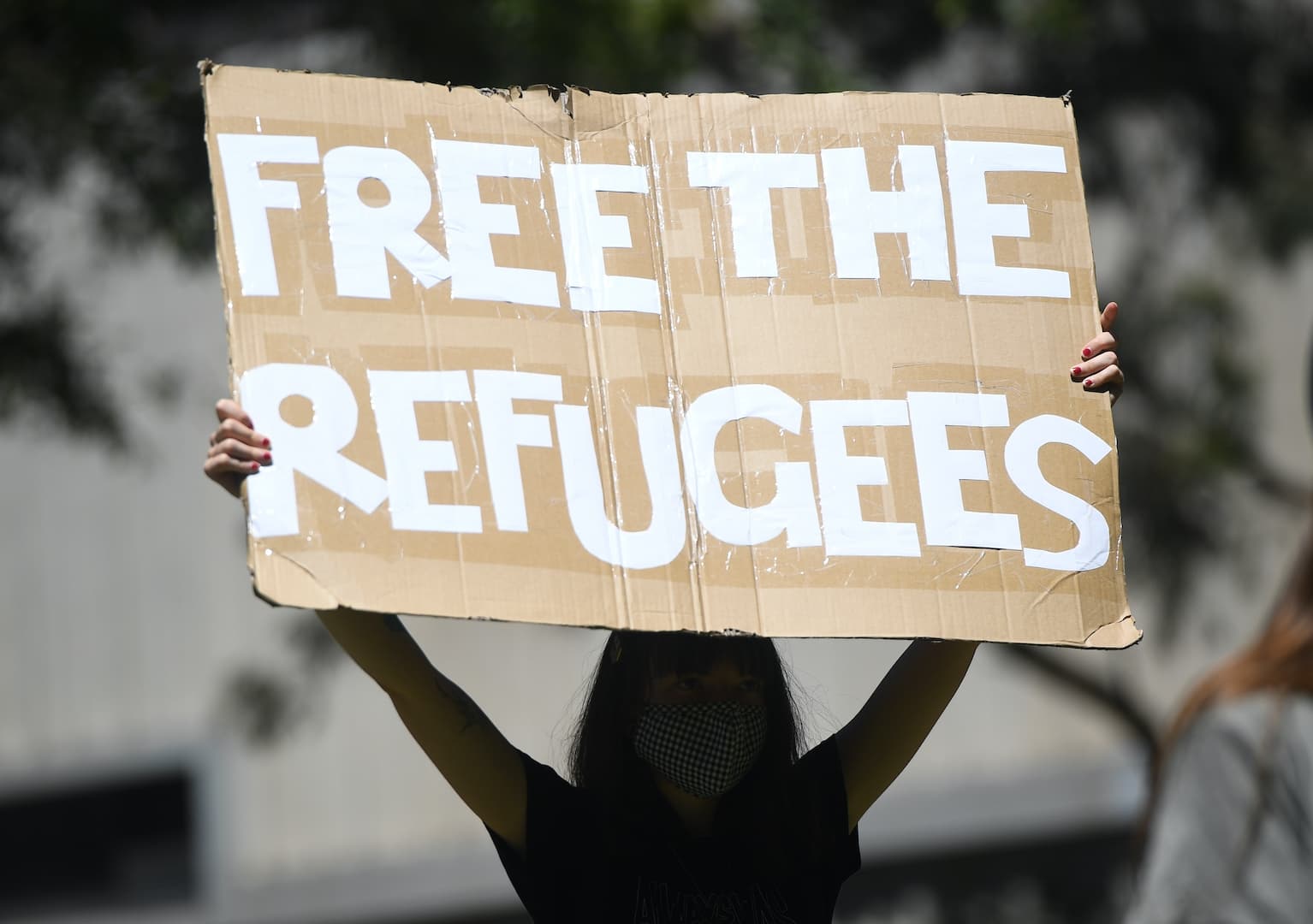
The day after the federal election was called, I met Pushpanayaki, a Tamil mother with two children, in Sunshine in Melbourne’s western suburbs. She witnessed the Sri Lankan army murder tens of thousands of people in 2009, during the final days of its war against our people. Pushpanayaki fled the genocide with her husband; they came to Australia as refugees.
Her two children—5-year-old Ashwini and 8-year-old Abeesan—were born here. They were happy to see me and asked me to bring chocolates next time I visit them. These two children are growing up in a house where their parents are constantly worried about being deported back to Sri Lanka. Ashwini and Abeesan can’t visit their cousins living overseas, and they still face the prospect of being put into detention and deported in the future to a country that they have never set foot in.
The Liberal and Labor parties have deliberately ruined the lives of this and so many other families. They are the sort of people that the next government, no matter which party forms it, pledges to send them back to the violence they have tried to flee.
Prime Minister Scott Morrison declares that if Labor wins the election, boats arrivals will start again—something we are supposed to object to or be fearful of. Anthony Albanese, opposition leader, confirmed that a Labor government would turn around refugees seeking safety and tow them back to where they came from.
This stomach-churning “debate” is happening at a time when thousands of refugees like Pushpanayaki are languishing in detention centres and in the community.
Australia’s detention system has repeatedly been found to be arbitrary, discriminatory and in violation of international law. The Geneva-based Global Detention Project’s most recent country report notes that the average length of refugee detention is nearly two years, and that the government still hasn’t established a detention monitoring body, which is required of it by the Optional Protocol to the UN Convention against Torture, which Australia ratified in 2017.
There are more than 30,000 refugees living in the community on bridging visas waiting for a decision on their protection claim. Many more have been granted temporary protection visas and Safe Haven Enterprise Visas. Another 550 refugees are waiting for resettlement to a third country. Most of these refugees have been living in the community for more than ten years.
All the refugees in the community have been denied basic rights. A father who left his children in transit countries and took on the dangerous journey alone is being punished by being denied family reunion. A child who grew up in Australia to refugee parents has to pay full fees to pursue higher education.
More than 15,000 refugees whose claims are before the courts are denied the right to work and to any government support. They can’t travel overseas to meet family members. There is very little support available for mental health issues.
I receive at least two phone calls a month from people letting me know of yet another refugee death in the Tamil community. Very often, it’s someone in their 30s. The latest was on Good Friday, when I received the news that Dinesh, who was 35, had been found unconscious in his bathroom by housemates in Sunshine West.
I also received a call from a distressed father, his son-in-law in a coma for two weeks. He was found in a pool of blood by housemates after he failed to show up at his work. After three weeks, he is still in critical condition—but our Immigration Department has denied his wife a visa to be by his side in the hospital.
Politicians can’t get enough of destroying refugee lives. Morrison recently accepted a New Zealand “deal” that offered very little hope to most of the refugees in the community. While it was celebrated as a victory by a section of the refugee movement, as time went by, it became more and more clear that this deal will separate families for years. There are 1,200 people eligible for resettlement in New Zealand, of whom only 450 will be freed—and over the next three years. That’s two to three years of uncertainty for most of the 450 people who have spent long years in detention.
No matter which of the major parties forms government after the election, we are going to have to continue fighting for every life. And not just for the thousands of people here in Australia, but the thousands stranded in third countries such as Indonesia, which isn’t a signatory to the Refugee Convention, and prevented by Australia from exercising their right to seek safety.
Aran Mylvaganam is the founder of the Tamil Refugee Council and the Victorian Socialists Senate candidate.
In the latest outburst of national security hysteria, ASIO spy chief Mike Burgess declared, in a speech on 28 February, that an unnamed former Australian politician had betrayed our beloved country by clandestinely working for an evil foreign spy network—which he called “the A-team”—to provide secret information to a rival power.
Measured by the sheer volume of stuff produced, capitalism is a very successful system. According to World Bank data, in 1960 global gross domestic product (GDP)—which measures the monetary value of goods and services sold—was just under US$1.4 trillion. By 2022 it had risen to $101 trillion. The world’s population has increased a lot in that time, but the volume of stuff produced has increased by far more.
As Israel’s latest brutal war against the people of Gaza drags on, the need to challenge the Zionist state and all those who facilitate its genocidal campaign couldn’t be clearer.

Banyule City Council has become the eighth metro council in the Melbourne area to formally call for an immediate ceasefire in Gaza.
In a monumental betrayal, Melbourne University’s Students’ Council last month voted to rescind a motion supporting the Palestinian struggle for self-determination and the global Boycott, Divestment, Sanctions movement.
The year is 2070. A global catastrophe—climate change, nuclear winter, civil war: pick your poison—recently ended civilisation and opened a new chapter in your life. So far you’ve ridden it out smoothly in your luxury bunker, but one day you’re swimming laps in the pool, living out your Bond-villain dream, when an alert blinks on your home security console.