
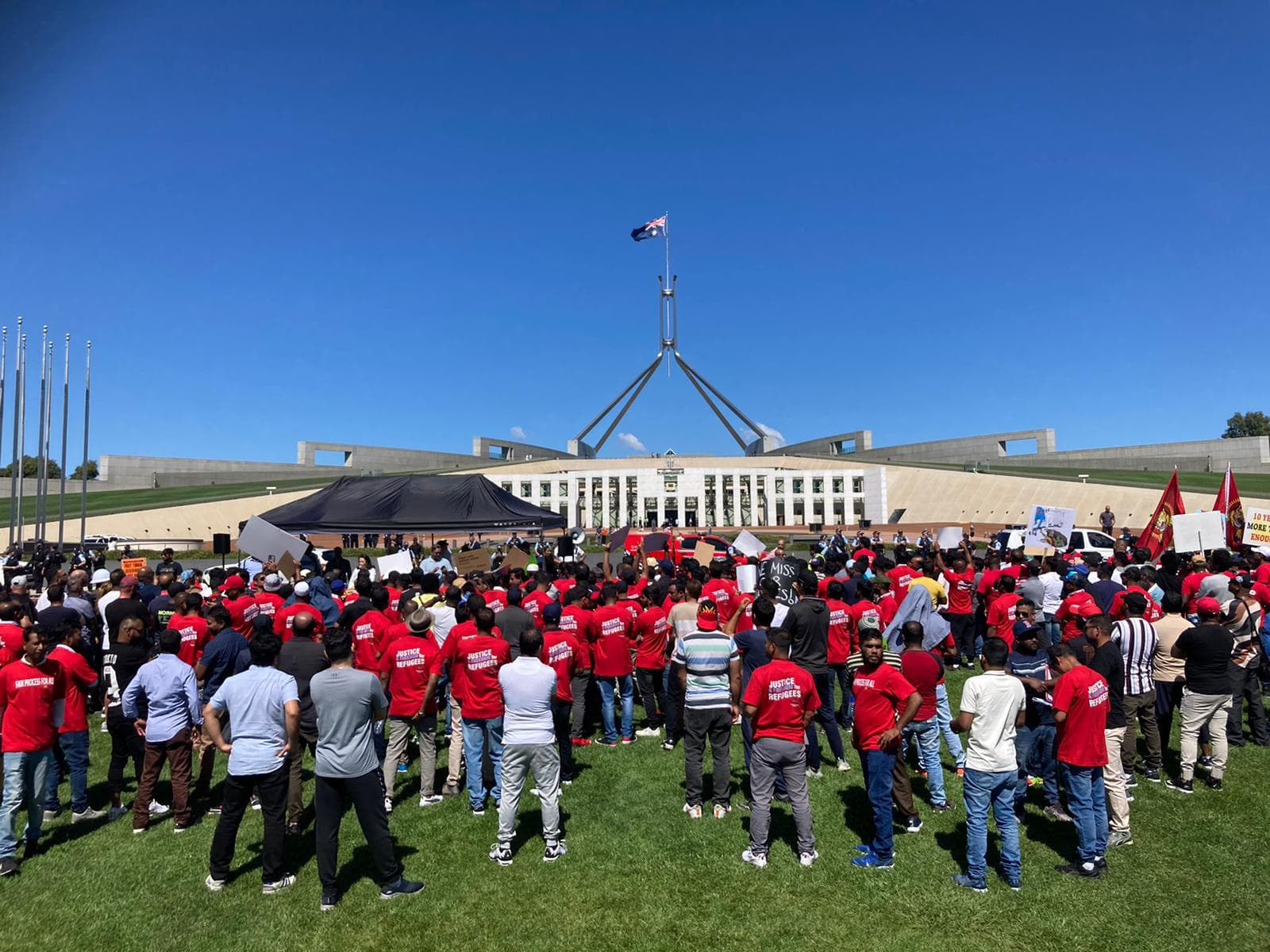
One thousand asylum seekers of all ages gathered at Parliament House, Canberra, on 6 March to demand permanent residency.
Inside, Labor member for Swan Zaneta Mascarenhas used her time—which is really our time—in the lower house to talk about an apparently equally pressing public concern: her favourite contestant on the recent season of Married at First Sight. “Sandy has inspired a whole generation” of women to find true love, she said.
The irony of a government MP using their time to discuss nuclear family simulation television while ignoring the thousands of desperate refugee families a couple hundred metres away would be comical if not so cruel.
Representatives of Afghan, Tamil, Fijian, Iraqi, Malaysian-Indian, Pashtun and more refugee communities were present at the rally. They and their supporters from across Australia chanted and held hundreds of homemade banners and signs on the parliament lawn.
“Last year I could not come because it is a busy time (for work). This time it’s still busy, but six of us have come. A whole assembly line is not running”, one refugee remarked.
Rupeni, a Fijian construction worker, drove three days from Western Australia to the capital for the protest. “We’re here to knock on Albanese’s door and remind him what he promised to us”, he told Red Flag.
Rupeni is one of an estimated 12,000 refugees excluded from the government’s Resolution of Status visa program, which provides a path to permanent residency for 19,000 people on temporary protection visas.
Mohammed, an Iraqi who arrived before 2013, said that he has spent more than $35,000 on legal fees yet didn’t secure a visa—but others who arrived on the same boat did. “I don’t understand”, he said. “Why am I less of a human being?”
It’s unsurprising that so many refugees are confused. Many campaigned for the ALP in last year’s federal election, believing that a Labor government would treat them better than the Liberals had.
Refugees are often advised—by politicians, media commentators and lawyers—to keep their heads down, be quiet and simply follow the “proper channels”. But the system is stacked against many asylum seekers because the laws on which the “proper channels” are based are unfair and unjust.
Prasanth, a Tamil refugee and nurse, spent three months in the Christmas Island concentration camp. Speaking about Priya and Nades, a Tamil couple who waged a successful campaign to be returned with their family to their home in Biloela, Queensland, he said: “They fought, and everybody knows what happened. The government tried to deport them. How did we stop that? It was protest”.
The victory of the family, who won permanent visas after a number of attempted deportations, is an example of the sort of campaigning we need to continue. Years of determined community organising and public campaigning, driven by Priya’s determination to fight the government won the family permanent residency.
They certainly didn’t wait calmly for the politicians to finish gushing about the latest episode of Married at First Sight before demanding their freedom.
Measured by the sheer volume of stuff produced, capitalism is a very successful system. According to World Bank data, in 1960 global gross domestic product (GDP)—which measures the monetary value of goods and services sold—was just under US$1.4 trillion. By 2022 it had risen to $101 trillion. The world’s population has increased a lot in that time, but the volume of stuff produced has increased by far more.
As Israel’s latest brutal war against the people of Gaza drags on, the need to challenge the Zionist state and all those who facilitate its genocidal campaign couldn’t be clearer.
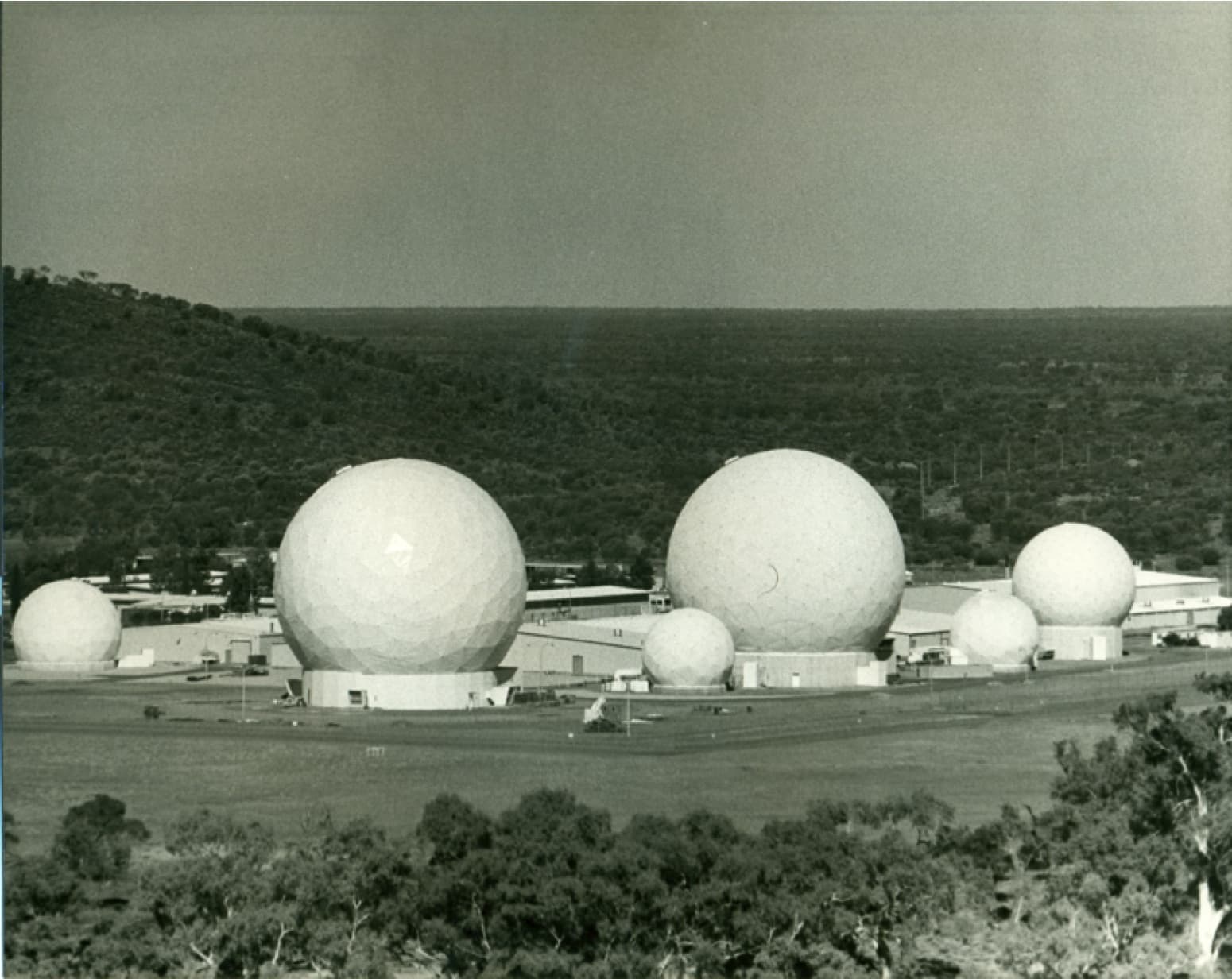
In the latest outburst of national security hysteria, ASIO spy chief Mike Burgess declared, in a speech on 28 February, that an unnamed former Australian politician had betrayed our beloved country by clandestinely working for an evil foreign spy network—which he called “the A-team”—to provide secret information to a rival power.

Banyule City Council has become the eighth metro council in the Melbourne area to formally call for an immediate ceasefire in Gaza.
In a monumental betrayal, Melbourne University’s Students’ Council last month voted to rescind a motion supporting the Palestinian struggle for self-determination and the global Boycott, Divestment, Sanctions movement.
The military ordered hundreds of thousands of people into a designated “safe” zone. On reaching it, they were shelled by the army and the air force. The generals said there was another safe zone; if the people kept moving, respite would be found. It wasn’t. Again they were attacked. The scene repeated, but now, corralled onto a tiny stretch of beach and trapped against the ocean, there was no way out.