
The Thin Red Line is a novel by James Jones set during the World War Two battle between the United States and Japan for control of the Solomon Islands. It is about the devastation war visits even on the “winners”; the title refers to the physical and mental fragility of human beings, which combat inevitably exposes with horrifying consequences. And it is about the hypocrisy and callousness of those who give the orders to fight without having to suffer those consequences.
Australia's rulers know that the imperialist tensions between the US and China could lead to war. They could also force Australia to act even more directly as an imperailist power in its own right. That's why Australia's accelerating its spending on military hardware.
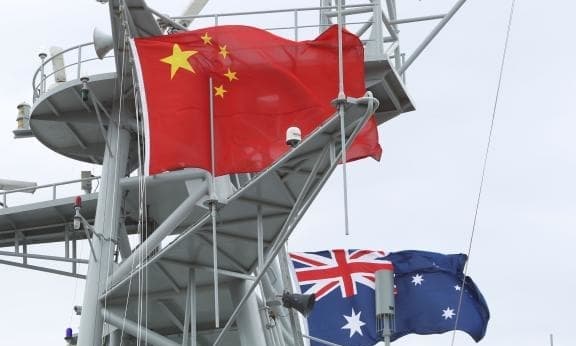
Australia’s rivalry with China in the south-west Pacific is intensifying. On 8 November, Scott Morrison declared it was time for Australia to “step up” in the region. He revealed a new aid package for Pacific island countries, featuring a $2 billion financing facility to help construct basic infrastructure including telecommunications, energy, water and transport.

In a rare moment of clarity, Donald Trump tweeted after Scott Morrison became prime minister, “There are no greater friends than the United States and Australia”.
New “foreign influence” laws were passed by federal parliament on 28 June, along with increased police powers relating to espionage and sabotage of infrastructure. The laws purport to counter the pernicious effect of overseas countries, specifically China, on Australian democracy.
The Manus Island concentration camp is not only the culmination of Australia’s increasingly brutal treatment of refugees over many years. It also epitomises the neo-colonial relationship between Australia and Papua New Guinea.